Movement as Problem Solving in Sports
Explore how movement in sports can be viewed as dynamic problem-solving, challenging traditional perspectives and offering new insights into athletic performance.
How Much Progress Have We Made in Skill Acquisition and Where Do We Need to Go?
Explores progress in skill acquisition, reviewing the SAFE framework and discussing key action points for effective practice design and instruction in sports and motor learning.
How Should We Be Varying Information in Practice - Specifying vs Non-Specifying Sources
Exploring types of information for action control and challenging the necessity of specifying information in practice. Insights on varying information sources for effective skill development.
Relationship Between the Yips and Motor Imagery Ability in Athletes - Lecture 477
Explore the connection between the Yips and motor imagery in athletes, examining differences in mental visualization and an ecological perspective on this performance issue.
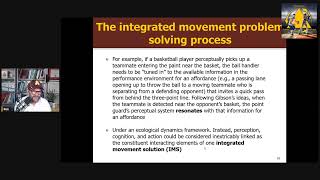
Movement as Problem Solving - Reconceptualizing Sport Behavior
Explore how sports movements can be reconceptualized as problem-solving activities, offering insights into athlete performance and skill development.
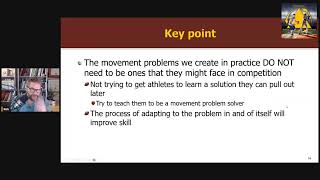
Representative Learning Design and The Ecological Approach to Transfer of Training
Explore ecological perspectives on training transfer, examining key elements for effective practice that translates to improved competitive performance.
Representative Learning Design and The Ecological Approach to Transfer of Training
Explore ecological transfer of training and representative learning design for effective skill improvement in competitive settings.
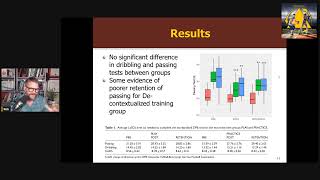
Evidence Supporting the Ecological Approach to Skill Development
Explore research addressing concerns and benefits of the ecological approach to skill development, focusing on long-term effects, consistency, and self-organization.
Evidence Supporting the Ecological Approach to Skill Development
Exploring research addressing concerns and benefits of the ecological approach to skill development, with insights on perception-action coupling in sports and motor learning.
Exploring Coaches' Experiences in Adopting a Nonlinear Approach to Skill Development
Exploring coaches' adoption of nonlinear, ecological approaches to skill development. Insights into contemporary pedagogical methods and their impact on coaching practices across different sports and cultures.