OP-TEE: Using TrustZone to Protect Our Own Secrets
Explore TrustZone technology for securing sensitive data in ARM CPUs, its potential applications, and the open-source OP-TEE implementation for Linux, with insights on current limitations and future possibilities.
OP-TEE - When Linux Loses Control
Explore OP-TEE's role in secure computing, examining how it operates independently from Linux to enhance system security and protect sensitive operations.
Maintaining a Community BSP Layer: Updating Meta-Tegra Through Major Changes
Explore strategies for maintaining the meta-tegra BSP layer amid major SDK and OpenEmbedded changes, covering bootloader updates, trusted OS transitions, and support for future Jetson platforms.
Faults in Our Bus - Novel Bus Fault Attack to Break Trusted Execution Environments in Embedded Systems
Uncover novel bus fault attacks on Trusted Execution Environments in embedded systems, exploring vulnerabilities in SoC system buses and their implications for IoT security and TEE implementations.
Using OP-TEE as a Cryptography Engine
Explore OP-TEE's role as a cryptography engine for secure IoT data storage, covering platform setup, driver implementation, and integration with Linux and OpenSSL.
How ARM Systems are Booted - An Introduction to the ARM Boot Flow
Explore ARM system boot processes, from reset vector to Linux startup, covering ARM Trusted Firmware, CPU power management, and system services like PSCI and SCMI.
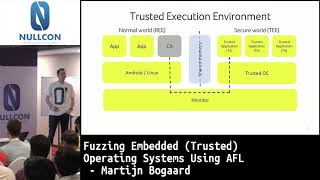
Fuzzing Embedded - Trusted Operating Systems Using AFL
Explore fuzzing techniques for Trusted Execution Environments using AFL, focusing on OP-TEE. Learn about challenges, coverage tracking, and creating initial inputs for effective embedded system security testing.
UEFI Secure Boot in U-Boot
Explore UEFI Secure Boot implementation in U-Boot, its benefits for embedded systems, and future plans. Learn about standardization efforts and improved OS distribution support.
Virtualizing Arm TrustZone on KVM
Extend KVM to virtualize Arm TrustZone, enabling VMs to run trusted execution environments. Explore implementation details, challenges, and future directions for secure virtualization.
OP-TEE is Ready - Let's Use It
Explore OP-TEE's capabilities and practical applications in secure embedded systems with expert guidance from Pengutronix e.K.'s Rouven Czerwinski.