
Design & Analysis of Algorithms
Comprehensive exploration of algorithm design techniques, analysis frameworks, and problem-solving strategies, covering divide-and-conquer, greedy algorithms, dynamic programming, and NP-completeness.
Fixed-Parameter Tractability of Scheduling Dependent Tasks on m Machines Subject to Release Times and Deadlines
Explore fixed-parameter tractability in scheduling dependent tasks on multiple machines with release times and deadlines. Gain insights into parameterized complexity and dynamic programming approaches.
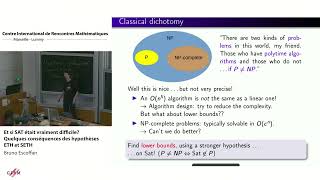
Et si SAT était vraiment difficile? Quelques conséquences des hypothèses ETH - Lecture
Explorez les implications des hypothèses ETH sur la difficulté du problème SAT et ses conséquences en informatique théorique et complexité algorithmique.
How Hard is it to Solve This? - Computational Complexity in Problem Solving
Explore problem-solving techniques in mathematics and statistics through lectures, hands-on sessions, and interactions with distinguished researchers. Gain broader exposure to key topics and enhance analytical skills.
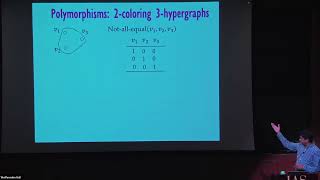
When and How are Promise Constraint Satisfaction Problems Efficiently Solvable
Delve into the mathematical foundations of Constraint Satisfaction Problems (CSP), exploring algorithmic efficiency, polymorphisms, and promise CSP applications in graph coloring and discrepancy minimization.

PAC Learning: From Finite Families to CNF Formulas - Lecture on March 20, 2023
Dive into PAC learning concepts, exploring finite families, conjunctions, k-CNFs, and NP-completeness in proper learning for 2-term CNF through advanced computational complexity theory.
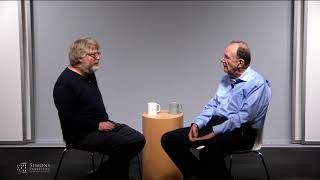
Oral History - Russell Impagliazzo in Conversation with Dick Karp
Explore key developments in theoretical computer science through an engaging conversation between Russell Impagliazzo and Dick Karp, covering topics from NP-completeness to computational biology.
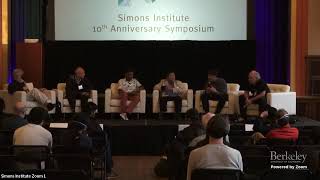
Beyond Worst-Case Analysis - Panel Discussion
Experts discuss advanced algorithmic analysis, exploring beyond worst-case scenarios to improve efficiency and understanding in computer science and machine learning applications.

Berkeley in the 80s - Richard Karp and the Theory of Computing
In-depth interview with Turing Laureate Richard Karp, exploring his groundbreaking research on computational theory at Berkeley in the 1980s and its lasting impact on computer science.
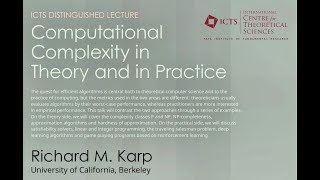
Computational Complexity in Theory and in Practice by Richard M. Karp
Explore the contrast between theoretical and practical approaches to algorithm efficiency, covering complexity classes, NP-completeness, approximation algorithms, and real-world applications.

Quantum Complexity - Quantum Computation at CMU
Explore quantum complexity, error probabilities, and complexity classes in this advanced lecture on quantum computation and information theory.
Quantum Constraint Satisfaction - Richard M. Karp Distinguished Lecture
Explore quantum Hamiltonian complexity, comparing it to classical constraint satisfaction. Learn about QMA-completeness, search-to-decision, dichotomy theorems, and coping with QMA-hardness in quantum applications.
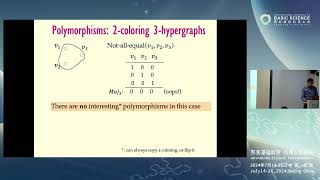
When and Why Do Efficient Algorithms Exist for Constraint Satisfaction and Beyond
Explore the mathematical structures behind efficient algorithms for constraint satisfaction problems and beyond, focusing on polymorphisms and their role in computational complexity.