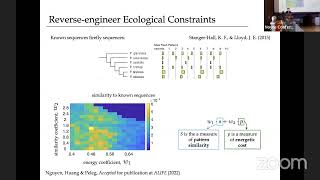
Physical Computation in Insect Swarms
Explore the fascinating world of collective behavior in insect swarms and discover how physical principles govern their complex interactions and decision-making processes.
Diverzita a úžasné schopnosti mravcov
Objavte fascinujúci svet mravcov, ich neuveriteľnú diverzitu a prekvapivé schopnosti. Prednáška odhaľuje málo známe fakty o týchto drobných, no pozoruhodných tvoroch.
How Do Insects Fly?
Explore insect flight biomechanics, neurobiology, and collective behavior. Discover how insects' unique adaptations contribute to their evolutionary success and environmental impact.
How Insects Smell and Why We Should Care
Explore insect olfaction and its significance with Dr. Hildebrand, a renowned expert in neurobiology and chemical ecology, as he delves into the fascinating world of how insects smell.

Agro-ecological Manipulation of Insect Behavior via GM Signaling - ICE 2016 Plenary Presentation
Exploiting insect-host signaling via GM for sustainable pest management: Dr. Pickett discusses agro-ecological manipulation of insect behavior and its potential applications in agriculture.

Harry Shorey's Contributions to Pheromone Biology - Founders' Memorial Lecture
Explore the legacy of Dr. Harry Shorey, pioneer in pheromone biology, through Dr. Thomas C. Baker's insightful lecture on the foundations and advancements in chemical ecology and entomology.
Traffic - From Insects to Interstates
Explore innovative solutions to traffic problems by examining animal behavior, mathematics, and physics. Experts discuss creative approaches to urban congestion and transportation challenges.
Emergent Spatiotemporal Patterns in Insect Swarms
Explore fascinating research on how insect swarms create complex patterns through collective behavior, examining mathematical models and biological insights from cutting-edge studies.

Honey Bee Intelligence: Thinking with One Million Neurons
Explore the fascinating mechanisms of honey bee cognition, learning how these remarkable insects navigate complex tasks with just one million neurons, offering insights for AI development.

La Banda de los Insectos | Diego Gómez | TEDxYouth@Usaquén
En esta charla, el biólogo Diego Gómez explora cómo los sonidos de insectos como grillos, chicharras y esperanzas pueden revelar información clave sobre la salud de los ecosistemas. A través del estudio de los paisajes sonoros y el uso de sensores acústicos e inteligencia artificial, su investigació

The case for eating insects | Kieran David Robertson | TEDxQueensUniversityBelfast
The industrial revolution, the invention of the car, and the first transatlantic flight each marked turning points in human history, shaping the way people live today. But those same advances have since caught up with humanity. Society now stands just five years away from 2030 – the year many scient