Engineering Thermodynamics
Explore fundamental thermodynamic principles, laws, and applications in engineering contexts, covering energy systems, power cycles, and property relations.
Applied Thermodynamics for Engineers
Comprehensive exploration of thermodynamic principles, cycles, and applications in engineering, covering power generation, refrigeration, and combustion processes.
Thermodynamics - Prof. Dr. Deniz Üner
Explore thermodynamics principles, including entropy, power cycles, and equations of state. Learn about practical applications like compressors, steam engines, and refrigeration systems.
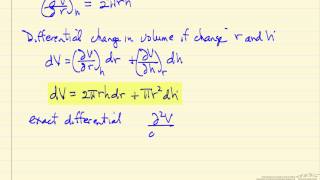
Thermodynamics - Generalized Analysis of Fluid Properties
Explore advanced thermodynamics concepts including Maxwell relations, equations of state, and phase equilibrium. Gain practical skills in analyzing fluid properties and solving complex problems.
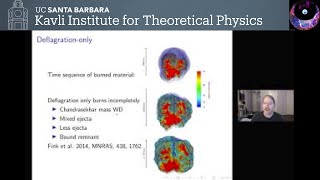
The Makings of Models for White Dwarf Supernovae - Dean Townsley
Explore the physics of white dwarf supernovae models, including detonation, deflagration, and double detonation mechanisms, with insights on their implications for astrophysics and future research directions.
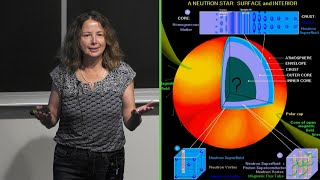
Realistic Binary Neutron Stars Collisions Simulations - Challenges and Opportunities
Explore challenges and opportunities in simulating binary neutron star collisions, focusing on realistic models, electromagnetic counterparts, and remnant properties using open-source codes and parametrized equations of state.
Prediction and Assignment of Spectra from Strongly Magnetized
Explore spectral prediction and assignment techniques for strongly magnetized systems, focusing on white dwarf stars and their astrophysical implications in galactic population studies.
Surviving Runaway Stellar Remnants from Thermonuclear Supernovae - Roberto Raddi
Explore surviving stellar remnants from thermonuclear supernovae with Roberto Raddi. Discover astrometric, photometric, and spectroscopic insights into white dwarfs and their role in understanding galactic evolution.
A Road-Map to White Dwarf Pollution - Marc Brouwers
Explore white dwarf pollution through astrometric, photometric, and spectroscopic data. Gain insights into stellar remnants and their role in probing various astrophysical phenomena.
Moment of Birth - How Infant-Phase Signals from SN2018aoz Inform
Explore how infant-phase signals from supernova SN2018aoz provide insights into white dwarf physics and stellar evolution, presented by Yuan Qi Ni from the University of Toronto.
Observations of Thermonuclear Supernovae - Kate Maguire
Explore thermonuclear supernovae observations with Kate Maguire, covering astrometric, photometric, and spectroscopic data from all-sky surveys to gain insights into white dwarf populations and their astrophysical implications.
Multidimensional Hydrodynamical Simulations and Radiative Transfer - Samuel Boos
Explore multidimensional hydrodynamical simulations and radiative transfer in white dwarf astrophysics. Gain insights into advanced modeling techniques for studying stellar remnants and their implications for galactic evolution.
Type Ia Supernova Progenitors - Ruediger Pakmor
Explore Type Ia supernova progenitors with Ruediger Pakmor, focusing on white dwarf physics, stellar evolution, and their role in galactic populations and gravitational wave sources.
A Unified Model for the Evolution of Cataclysmic Variables - Arnab Sarkar
Explores a unified model for cataclysmic variable evolution, discussing recent observational data and theoretical developments in white dwarf physics to advance our understanding of these stellar remnants.
Magnetic Braking in Binaries Containing White Dwarfs - Kareem El-Badry
Explore magnetic braking in white dwarf binary systems with insights from astrometric, photometric, and spectroscopic surveys, revealing implications for stellar evolution and gravitational wave sources.
Stellar Autopsies from White Dwarf Pulsations - JJ Hermes
Explore white dwarf pulsations as a tool for stellar autopsies, uncovering insights into stellar evolution, Galactic history, and fundamental physics through cutting-edge observational and theoretical approaches.

White Dwarf Sedimentation and Phase Separation - Status
Explore white dwarf sedimentation and phase separation with expert Evan Bauer, discussing current research status and implications for stellar evolution and galactic history.
Fractionation Processes in Crystallizing White Dwarfs - Simon Blouin
Explore fractionation processes in crystallizing white dwarfs, examining their impact on stellar evolution and composition. Gain insights into cutting-edge research in astrophysics and stellar remnants.
Relativistic Hydrodynamics
Explore relativistic hydrodynamics with expert Luciano Rezzolla, covering fundamental concepts and advanced applications in astrophysics and high-energy physics.