Docker for Data Science Tutorial
Comprehensive Docker tutorial for data scientists, covering containers, images, installation, and Docker Compose. Learn to implement end-to-end data science projects using Docker.
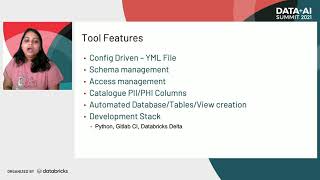
Automated Metadata Management in Data Lakes - A CI/CD Driven Approach
Discover a CI/CD-driven approach to automated metadata management in data lakes, focusing on balancing development speed, governance, and schema evolution for rapidly growing organizations.
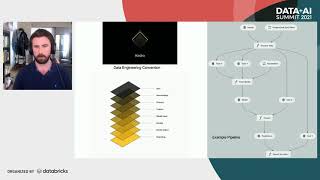
A Collaborative Data Science Development Workflow Using Kedro and MLflow
Explore a collaborative data science workflow using Kedro pipelines, MLflow tracking, and cloud-agnostic GPU containers for efficient model development, training, and production deployment.

Migrating Airflow-Based Apache Spark Jobs to Kubernetes - The Native Way
Learn to migrate Airflow-based Apache Spark jobs to Kubernetes, reducing costs and improving stability. Explore challenges, best practices, and native Airflow integration for seamless transition from AWS EMR to K8s.

Getting Started with Apache Spark on Kubernetes
Learn to deploy and optimize Apache Spark on Kubernetes with hands-on demos, covering environment setup, application sizing, performance tuning, and monitoring for efficient data pipeline management.

DBT Using Databricks and Delta
Learn to leverage Data Build Tool (DBT) with Databricks and Delta for efficient data lake management, including SQL-first approach, upsert capabilities, and Azure integration for enhanced observability.
Building an MLOps Platform with MLflow for Rapid Model Productionalization
Discover how DataSentics built an MLOps platform around MLflow to streamline model productionalization, reducing deployment time to minutes. Learn about real-life experiences, platform demo, and lessons learned.

Fugue: Unifying Big Data Analytics Ecosystems for ETL and Machine Learning
Unifying big data ecosystems with Fugue: SQL-like framework for ETL and ML pipelines, compatible with Spark, TensorFlow, and more. Simplifies development, improves performance, and enhances maintainability.

Simplify and Boost Spark 3 Deployments with Hypervisor-Native Kubernetes
Explore integrating Spark 3 with VMware Pacific for scalable, reliable, and high-performance big data analytics deployments using hypervisor-native Kubernetes on vSphere 7.
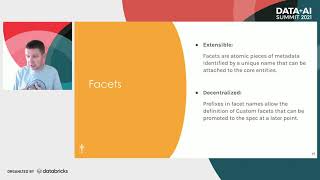
Observability for Data Pipelines with OpenLineage
Explore data pipeline observability using OpenLineage, enhancing reliability and auditability. Learn how metadata collection enables understanding of data flow and dependencies across teams and technologies.
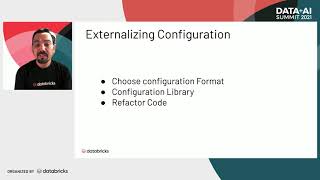
Dumb-Proofing Data Pipelines: Techniques for Configurable and Maintainable ETL - Databricks
Techniques to create configurable, maintainable data pipelines. Learn to externalize configurations, validate inputs, and leverage Scala features for robust, easily deployable ETL processes.
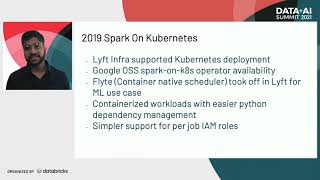
Hybrid Apache Spark Architecture: Optimizing YARN and Kubernetes for Lyft's Workloads
Explore Lyft's hybrid Apache Spark architecture using YARN and Kubernetes, addressing scalability challenges and optimizing workload management for improved reliability and efficiency.
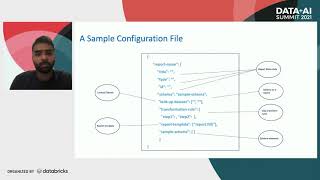
Configuration-Driven Reporting on Large Datasets Using Apache Spark
Configurable enterprise framework for generating and distributing diverse reports from large financial datasets using Apache Spark, with dynamic scheduling and data transformation capabilities.
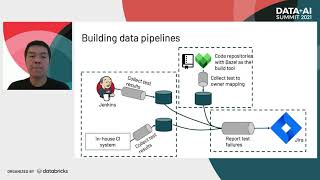
Managing Millions of Tests Using Databricks - Automated Monitoring and Reporting System
Explore automated test monitoring and reporting for Databricks Runtime using Delta, analyzing results from various sources to track quality and efficiently report failures to owners.
Multi-Table Transactions with LakeFS and Delta Lake - Tech Talk
Explore multi-table transactions using LakeFS and Delta Lake for collaborative data lake management, enabling CI/CD deployment and simplified multi-table pipelines in cloud storage systems.
Running Apache Spark on Kubernetes - Best Practices and Pitfalls
Learn best practices and pitfalls for running Apache Spark on Kubernetes, covering setup, performance optimization, resource management, security, and future developments in this comprehensive overview.
Re-Imagining Apache Spark Development - Tools for Productivity and Standardization
Exploring next-gen tools for Apache Spark development, focusing on productivity, code standardization, metadata, lineage, and CI/CD agility to overcome limitations of traditional ETL tools.
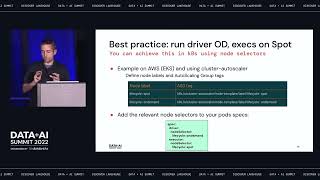
How to Make Apache Spark on Kubernetes Run Reliably on Spot Instances
Learn to run Apache Spark on Kubernetes using spot instances for cost savings. Discover best practices, code examples, and techniques to handle spot interruptions while maintaining reliability and performance.
Improving Apache Spark Application Processing Time - Configuration and Optimization Techniques
Optimize Spark streaming app performance through configurations, code improvements, and custom data source implementation for processing 700 MB/s of compressed data with strict KPIs.
Apache Spark on Kubernetes - Lessons Learned from Launching Millions of Spark Executors
Lessons learned from running massive Spark workloads on Kubernetes at Apple, covering orchestration, resource management, monitoring, and optimization for scalability and performance.
Securing Databricks on AWS Using PrivateLink - Deployment and Automation
Learn to secure Databricks on AWS using PrivateLink, covering architecture, setup, and automation. Gain insights on minimizing public internet data transfers for enhanced security and cost-efficiency.