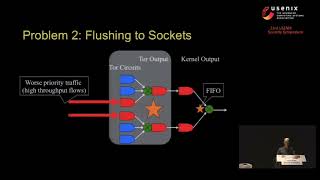
Never Been KIST - Tor’s Congestion Management Blossoms with Kernel-Informed Socket Transport
Explores Tor's congestion issues, proposing KIST algorithm to improve network performance by optimizing socket management using real-time kernel information, reducing latency and increasing throughput.
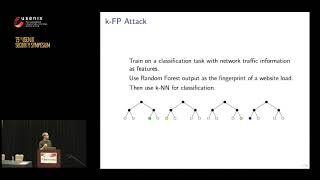
K-Fingerprinting - A Robust Scalable Website Fingerprinting Technique
Explores k-fingerprinting, a robust website fingerprinting technique using random decision forests, demonstrating high accuracy in identifying visited web pages through encrypted connections.

Advanced Napkin Math - Estimating System Performance from First Principles
Learn to quickly estimate system performance using base rates and napkin math, enabling informed decision-making in technical discussions and design processes without building systems first.
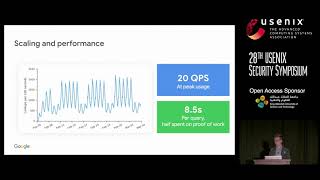
Protecting Accounts from Credential Stuffing with Password Breach Alerting
Explore a privacy-preserving protocol for detecting exposed credentials, its implementation as a cloud service, and its effectiveness in prompting users to update compromised passwords.
DNSControl - A DSL for DNS as Code from StackOverflow.com
Explore DNSControl, a DNS DSL and compiler enabling DevOps practices for DNS management. Learn how StackOverflow.com automates complex configurations, simplifies updates, and enhances reliability.
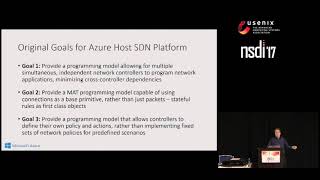
VFP - A Virtual Switch Platform for Host SDN in the Public Cloud
Explore Microsoft Azure's Virtual Filtering Platform (VFP), a programmable virtual switch for host SDN in public clouds. Learn its design, API, flow language, and real-world performance in large-scale deployments.
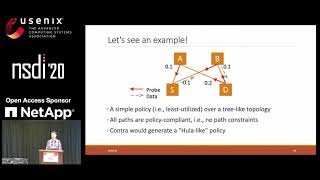
Contra - A Programmable System for Performance Aware Routing
Programmable system for adaptive, performance-aware network routing across various topologies and policies. Compiles network-wide policies into switch-local programs, implementing specialized distance-vector protocols for optimized path selection.
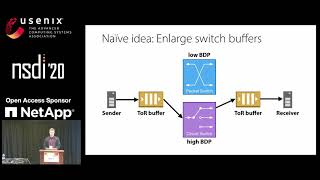
Adapting TCP for Reconfigurable Datacenter Networks
Explores TCP adaptation for modern reconfigurable datacenter networks, proposing dynamic queue resizing and explicit circuit state feedback to improve circuit utilization and performance.
Experiences with Modeling Network Topologies at Multiple Levels of Abstraction
Explores MALT, a multi-layer topology representation for network management, covering its benefits, implementation challenges, and lessons learned in creating a comprehensive topology model.
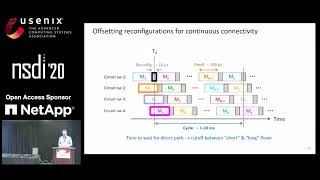
Expanding Across Time to Deliver Bandwidth Efficiency and Low Latency
Innovative network design for datacenters combining low-latency delivery and high-bandwidth efficiency through dynamic reconfiguration, outperforming static topologies for various workloads.
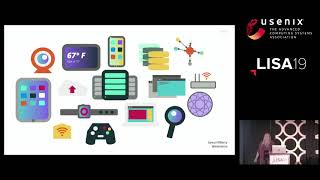
Anatomy of a DDoS
Explore DDoS attacks: structure, evolution, and countermeasures. Learn about botnet creation, recent high-profile incidents, and ongoing efforts to combat this cybersecurity threat.

Network Fault Finding System - Packet Loss Triangulation
Discover how Facebook's active probing system detects network faults in real-time, even in deep layers. Learn to build a similar system using open-source tools and see a live demo.
TCP - Architecture, Enhancements, and Tuning
Comprehensive exploration of TCP architecture, enhancements, and tuning, covering core concepts, connection establishment, flow control, congestion avoidance, and performance optimization techniques for network engineers.
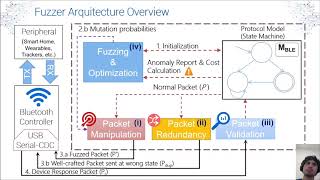
SweynTooth - Unleashing Mayhem over Bluetooth Low Energy
Explores vulnerabilities in Bluetooth Low Energy protocol implementations, presenting a systematic fuzzing framework that discovered 11 new vulnerabilities across various devices and IoT products.
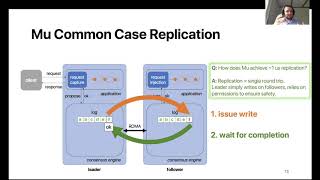
Microsecond Consensus for Microsecond Applications
Innovative consensus protocol leveraging RDMA for microsecond-scale replication and rapid fail-over in latency-sensitive applications, significantly outperforming existing systems.
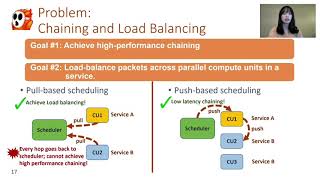
PANIC - A High-Performance Programmable NIC for Multi-tenant Networks
Explores Frenzy, a novel programmable NIC design with high-performance switching interconnect and hybrid push/pull packet scheduler, addressing limitations in multi-tenant networks and diverse offloads.
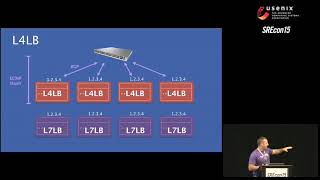
Building a Billion User Load Balancer
Discover Facebook's innovative load balancing techniques for handling billions of users, improving performance, managing capacity, and enhancing reliability at a global scale.
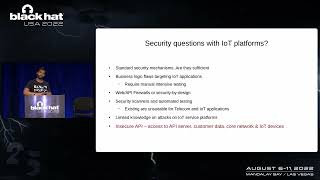
Attacks From a New Front Door in 4G & 5G Mobile Networks
Unveils critical API vulnerabilities in 4G/5G networks, exposing risks for AI, MEC, and IoT applications. Explores attack vectors, security misconfigurations, and potential exploits in commercial providers' systems.
AAD Joined Machines - The New Lateral Movement
Explore new lateral movement techniques in Azure AD joined machines, including Pass-The-Certificate attacks and hunting solutions for enhanced network security.
New Ways of IPv6 Scanning
Explore innovative techniques for IPv6 scanning, uncovering vulnerabilities and effective methods to obtain IPv6 addresses despite the vast address space.
APTs Go Teleworking - The Rise of VPN Exploits
Explore the rise of VPN exploits amid increased remote work, focusing on Pulse Secure vulnerabilities, incident response challenges, and threat actor tactics in cyber espionage campaigns.