Networks, Signals and Systems
Comprehensive exploration of network theory, signals, and systems, covering elements, parameters, transforms, frequency response, synthesis, graph theory, impedance, filters, and Fourier series.
Control Engineering
Comprehensive exploration of control engineering principles, from basic concepts to advanced techniques, covering system modeling, analysis, and design methods for various control applications.
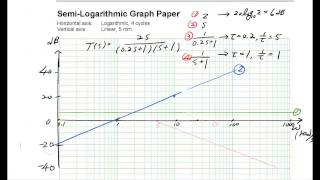
Modeling and Simulation of Dynamic Systems
Learn to model dynamic systems, analyze transfer functions, create Bode plots, and understand OP-Amp circuits. Practical examples include mechanical systems and signal filtering techniques.
Control System - Related to GATE Syllabus
Comprehensive GATE preparation covering control systems, including time and frequency responses, stability analysis, root locus, Bode plots, and state space analysis. Includes problem-solving and exam strategies.
Intuition Behind the Dominant and Second Poles in a Miller Compensated OTA
Explore dominant-pole compensation, phase margin, and Miller compensation in operational transconductance amplifiers. Gain insights into pole splitting for improved stability.
Introduction to Type-III Compensator
Explore Type-III Compensator fundamentals, understanding its principles, applications, and design considerations in control systems engineering.
First Order Systems and Phase Margin
Explore first order systems and phase margin concepts in control engineering, enhancing understanding of system stability and performance.
Phase Margin Example in Dominant-Pole and Miller Compensation
Explore dominant-pole compensation, phase margin, and Miller compensation techniques to enhance your understanding of electronic circuit stability and performance.
Introduction to Type-II Compensation
Learn about Type-II compensation techniques, their applications, and how they enhance system stability and performance in control engineering.
Finding the Poles of the Error Amplifier - Part 2
Explore error amplifier pole identification techniques, enhancing understanding of circuit analysis and design for improved electronic system performance.
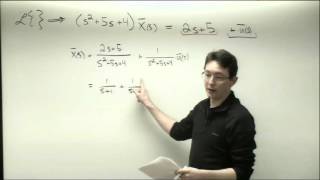
Laplace Transform and ODEs with Forcing and Transfer Functions
Explore Laplace transforms, ODEs, and transfer functions in engineering mathematics, focusing on spring-mass-damper systems and frequency response analysis.