Building Scalable AI Agents with Ray
Explore Ragent, a framework for scalable AI agents built on Ray's distributed computing capabilities. Learn about its key features and integration with popular tools for developing production-ready agent applications.
Multi-Agent AI Systems with AutoGen - Complete Code Tutorial
Dive into Microsoft's AutoGen framework, exploring multi-agent AI systems through practical code examples, communication protocols, and agent control mechanisms for advanced LLM applications.
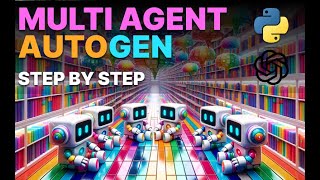
Multi-Agent AutoGen and Group Chat Implementations - Step-by-Step Walkthrough
Step-by-step guide to implementing Multi Agent AutoGen and Group Chat interactions using Microsoft's library, with focus on GPT-4 integration, Docker setup, and code execution.

Autogen and Local LLMs Create Realistic Stable Diffusion Model Autonomously
Explore AI-powered creation of realistic SDXL models using autonomous agents and local LLMs. Learn setup, implementation, and troubleshooting for cutting-edge AI image generation techniques.
AutoGen Introduction: Step-by-Step Guide Including Docker Setup
Step-by-step guide to using AutoGen library for creating agent interactions with GPT-4, including config setup, conversation history saving, and Docker integration for safe code execution.
AutoGen - A Multi-Agent AI Framework
Explore AutoGen's core functionalities and key concepts for implementing complex AI workflows, integrating models, tools, and human inputs across various tasks and industries.
Microsoft Autogen vs CrewAI - Comparison and Use Case Analysis
Comparative analysis of Microsoft's Autogen and CrewAI frameworks, exploring their capabilities, performance, and scalability across diverse use cases and agent interactions.
Llama Agents - AI Agents as a Service and How It's Different
Explore Llama Agents: transform enterprise data into AI apps, compare with other frameworks, and learn setup, hosting, and integration techniques for production-ready AI solutions.
Using Open Source LLMs with AutoGen - Deploying Llama 2 70B Tutorial
Deploy open-source LLMs with AutoGen using vLLM, Runpod, and Postman to simulate OpenAI chat completion endpoints. Learn to utilize this setup as a direct replacement for OpenAI invocations.
LangGraph AI Agents: The Future of Internet Search
Explore LangGraph AI agents for advanced internet searches. Learn to create, set up, and execute collaborative agents using LangChain, enhancing search capabilities and gaining deeper insights.
AutoGen RAG - Creating AI Agents with a Second Brain
Explore how to enhance AI agents with Retrieval-Augmented Generation, enabling more accurate and context-aware responses through a "second brain" approach. Learn implementation steps and practical examples.

Creating and Publishing Multiple AI Agents to Production with Praison AI
Simplify AI agent creation and management with Praison AI, a low-code solution merging Autogen and Crew AI functionalities. Create powerful agents using a single page of text and deploy easily to Google Cloud.

Autogen(.NET) - Building GenAI Applications with AutoGen
Build dream teams of AI specialists with AutoGen(.NET), enhancing productivity through seamless collaboration of diverse AI capabilities for complex problem-solving.
LLM Projects - A Quick Tutorial on Multi-Agent Workflows with AutoGen
Explore multi-agent workflows using AutoGen framework for RAG-based question answering with Wikipedia integration. Learn to implement and leverage this powerful approach for dynamic information retrieval.
AutoGen AI Travel Agent Tutorial - Building a Multi-Agent Flight Search System
Develop an AI travel agent using AutoGen framework to search flights, connect with Amadeus API, and manage data in serverless SQL databases.
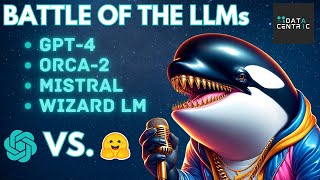
GPT-4 vs Open Source LLMs: Epic Rap Battles Test Creativity with AutoGen
Witness open-source LLMs battle GPT4-Turbo in freestyle rap, showcasing linguistic creativity. Compare Wizard LM 70B, Orca-2 13B, and Mistral 7B against the advanced benchmark.
AutoGen: Hype vs. Reality - Limitations for Real-World Applications
Explore AutoGen's capabilities and limitations in multi-agent workflows, distinguishing hype from reality. Gain insights into its potential and current constraints for real-world applications.

Why I'm Staying Away from Crew AI - A Critical Analysis
Explore limitations of Crew AI for production, understand multi-hop questions, and learn alternative approaches for building AI applications. Gain insights on future multi-agent frameworks.

Building Custom AI Agents: Beyond CrewAI and AutoGen
Develop a custom web search AI agent in Python. Learn why building your own agents can be more effective than using existing frameworks for AI and multi-agent workflows.

Understanding Microsoft's Magnetic-One: A Generalist Multi-Agent AI System
Explore Microsoft's Magentic-One system, a generalist multi-agent framework that tackles complex tasks through unified code and prompts, with practical demonstrations and architectural insights.